The Song Cha
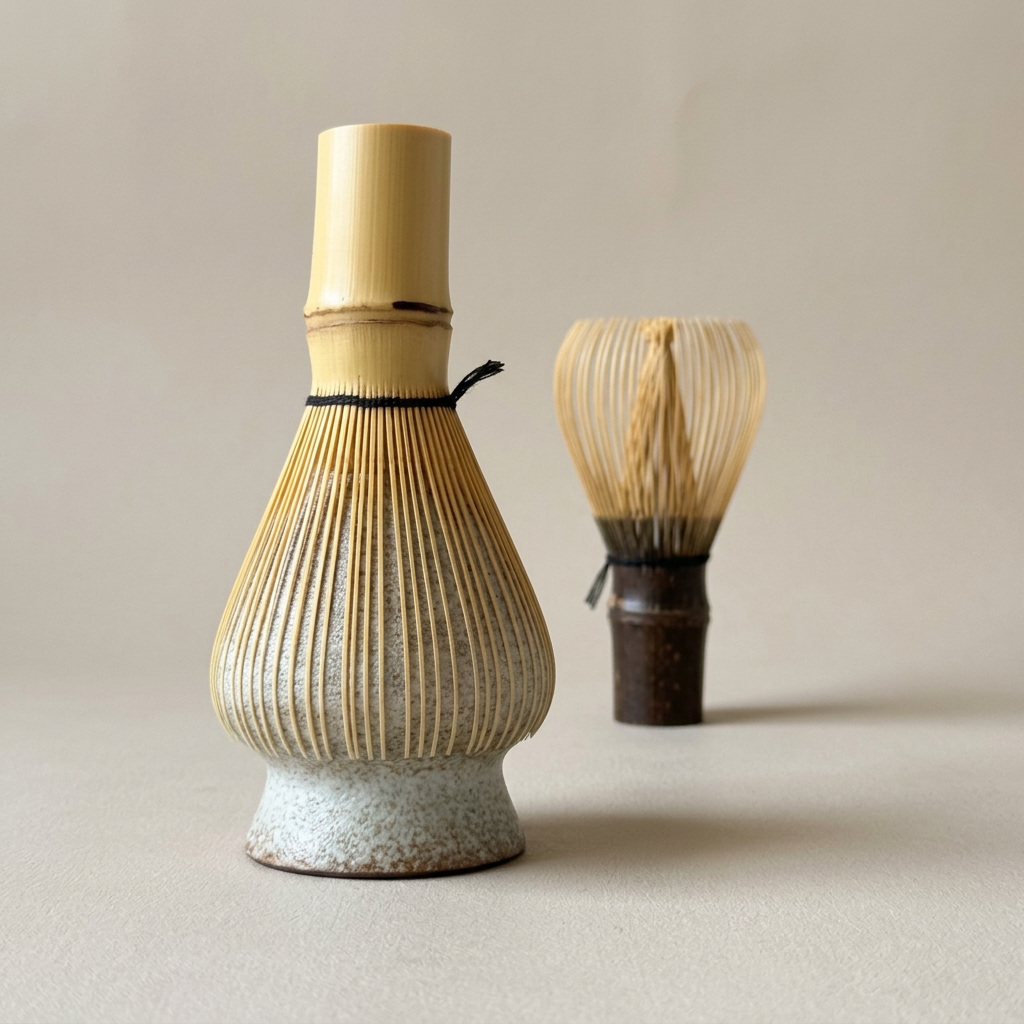
Golden Bamboo Matcha Whisk (Shin Chasen)
Golden Bamboo Matcha Whisk (Shin Chasen)
Fine foam, with a forgiving feel.
Straight, springy tines whisk matcha into a dense, even foam. Golden bamboo is a touch firmer than our purple — more forgiving while your stroke finds its pace, and built for daily use. It's the one we'd start with. Handmade in Hangzhou from 5-year-old golden bamboo.
Prefer a softer, springier whisk for the silkiest foam? See the purple bamboo Shin.
Couldn't load pickup availability
Material
Material
5-year-old golden bamboo (the age of the bamboo when cut)
Approx. 64–70 tines
Handmade in Hangzhou, China
Height: approx. 10.5 cm (4.1 in)
Tine length: approx. 6 cm (2.4 in)
Tine spread: approx. 5.5 cm (2.2 in)
Handle diameter: approx. 2.5 cm (1.0 in)
Weight: approx. 12.5 g
Each whisk is made by hand, so sizes vary slightly. You may see a few fine bamboo fibers on the tines. They are a normal sign of handwork and don't affect whisking.
Care: rinse with warm water only. No soap, no dishwasher.
How to Use
How to Use
Before first use: soak the tines in water at about 80°C (175°F) for 2–3 minutes, so they relax and open naturally.
Every time:
1. Soak the tines in warm water for about a minute. Softened bamboo is less likely to break.
2. Sift 3g of matcha into a bowl. A sifter weight helps break up clumps.
3. Add about 60ml (2 oz) of water at 80–85°C (175–185°F).
4. Whisk quickly but lightly from the wrist in a zigzag motion, keeping the tines suspended in the tea rather than pressed to the bottom. When a fine foam covers the surface, slow down to even out the bubbles, then lift the whisk out from the center.
To protect the tines:
- Don't press or scrape the tines against the bottom of the bowl.
- Use a smooth, glazed bowl. Rough clay or uneven glaze wears the tines down.
- Avoid stabbing straight up and down.
After use:
1. Rinse the tines in warm water. No soap.
2. Shake off the water, stand the whisk on its handle or on a whisk holder, and let it dry fully in open air.
3. Store it only once completely dry. A damp whisk sealed in its box can mold.
Frequently Asked Questions
Frequently Asked Questions
Q: Golden or purple bamboo: which should I choose?
A: Both whisk a fine, dense foam. Golden bamboo is a little firmer and more durable, and more forgiving if you're still learning — a good place to start. Purple bamboo is softer and springier, for the silkiest foam. They're the same price, so choose by feel.
Q: What does "5-year-old bamboo" mean?
A: It's the age of the bamboo when it was cut, not how long the whisk was stored. Mature bamboo is denser, which suits whisk making.
Q: Why does it have about 64–70 tines? Some whisks say 100.
A: Around 64–70 tines is typical for traditional handmade whisks of this kind. Foam depends mostly on how finely the tine tips are shaved, more than on the count.
Q: I see small bamboo fibers on the tines. Is that a defect?
A: No. Fine fibers are a natural mark of a handmade whisk and don't affect whisking. If your whisk arrives cracked, with broken tines, or with loose binding thread, contact us and we'll replace it.
Q: Can I use it with other tea powders?
A: Yes. It works with matcha, our green tea powders, Jasmine Cloud, and Honey Orchid Oolong.
Q: Is it normal for tines to break?
A: Yes. A bamboo whisk wears with use, so a tine breaking now and then is normal wear, not a defect. Soaking before each use and whisking without pressure keeps breakage to a minimum.
Q: What kind of bowl should I use?
A: A bowl with a smooth, glazed inside. Rough clay or uneven glaze catches the tines and wears them down.
Q: Do I need to soak it before using?
A: Yes. Before the first use, soak the tines in water at about 80°C (175°F) for 2–3 minutes. After that, soak them in warm water for about a minute each time. Soft tines whisk better and break less.
Share